
Popular on Amzeal
- Immerse Yourself in the Historic Tochigi Autumn Festival, Celebrated Every Two Years Since 1874 - 230
- XImagineAI Upgrades Its Multi-Model AI Video Generator for Image to Video and Text to Video - 220
- Unlocking the Next Phase of Growth with New AI Innovations; Targeting 2027 as Breakeven; Revenue Momentum Accelerates: ZenaTech (N A S D A Q: ZENA) - 187
- ZenaTech (NAS DAQ: ZENA) $1 Million in New Utility Contracts- Potential $2.5 Million Follow-On Opportunity Puts Its Drone Business in the Spotlight! - 163
- Award-Winning American Hotelier Opens Art-Filled Luxury Cottage in Norfolk, England - 161
- Paraguay Expedition Offers a Different View of Human Resilience - 158
- EMBER™ Unveils the Workplace Identity Score™ (WIS™), the First Standard for Measuring Workplace Impact on Workforce Performance & Business Growth - 136
- Arizona Technology Council and Arizona Commerce Authority Announce 2026 GCOI Legislator Award Honorees - 132
- Nextlink Internet Deploys netElastic to Modernize Its Hybrid Broadband Network - 130
- Freight Broker 911 and Milton Collier Introduce "What's The 911?"—A New Podcast Built on Real Talk, Real Freight, and Real Opportunity - 126
Similar on Amzeal
- Scott Glickson Joins STS Capital Partners as Managing Director
- BREAKTHROUGH TROP2 Research Reveals New REQORSA® Opportunities as Roche Collaboration Strengthens Precision Lung Cancer Strategy
- Scoop Social Co. Brings Its Signature Mobile Dessert Experience to Dallas–Fort Worth
- PinnacleQM launches new enterprise website to help Australian organisations deliver more with confidence
- Loud! OOH Launches UK's First Free Planning Tool for UK Outdoor Advertising Budgets
- Boston Industrial Solutions Introduces the New Volta® M100 Pad Printing Machine
- Scoop Social Co. Brings Its Signature Mobile Dessert Experience to Minneapolis
- Record Q3 Revenue and Gross Profit Delivered: Revenue Surges 40%, Gross Margin Soars to 36% & Adjusted EBITDA Loss Narrows 64% for Cycurion, Inc $CYCU
- UK Financial Ltd Launches MayaSwap On MAYA CHAIN To Facilitate UKFLMS-For-Gold Swaps, Officially Transforming UKFLMS From Meme Into A Real-World Asset
- Entrepreneur Nouho M Kanneh Talks Family, Faith and a $37 Million Portfolio in New Interview
Space Ambitions Expanding as New Testing Builds on NASA Results and Targets MEO, GEO and Next-Generation Orbital Markets: Ascent Solar Technologies
Amzeal News/10639214
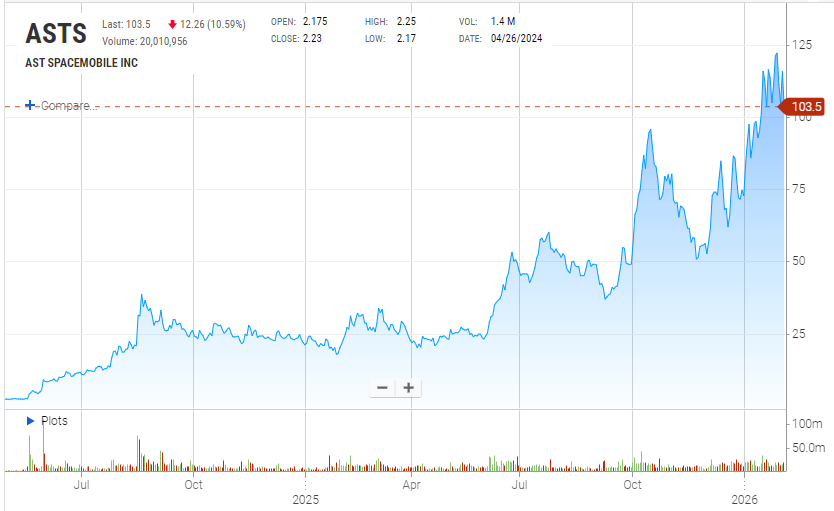
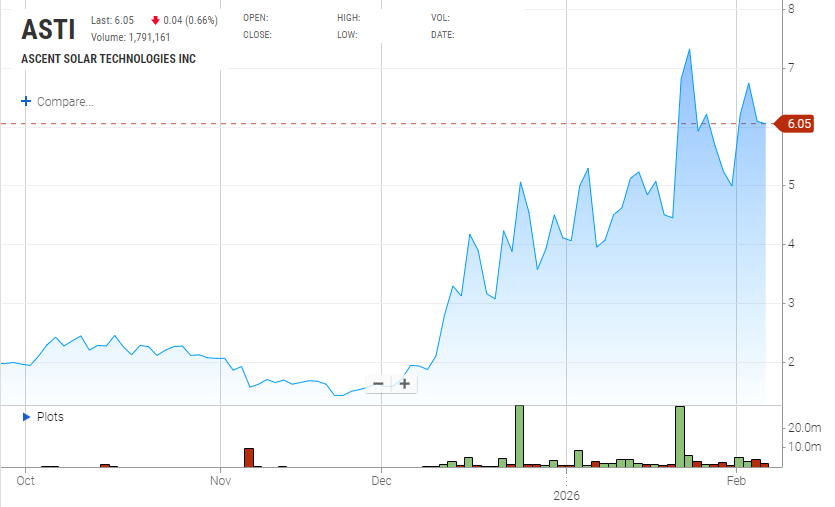
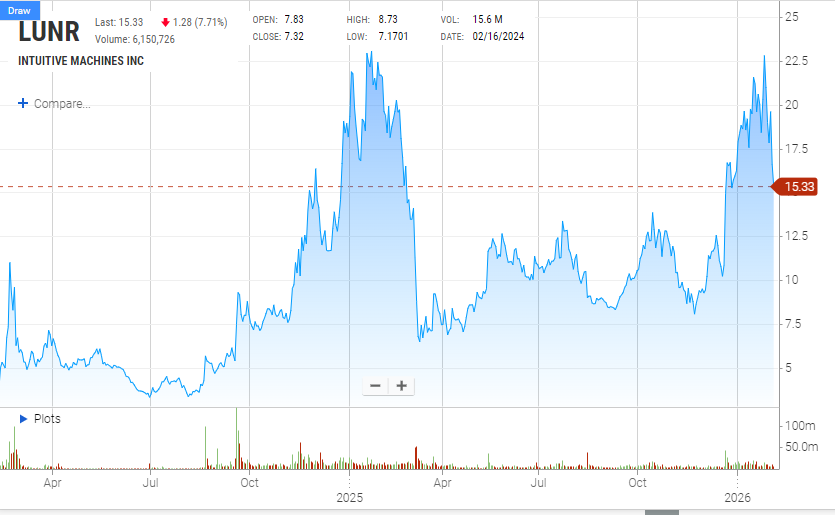
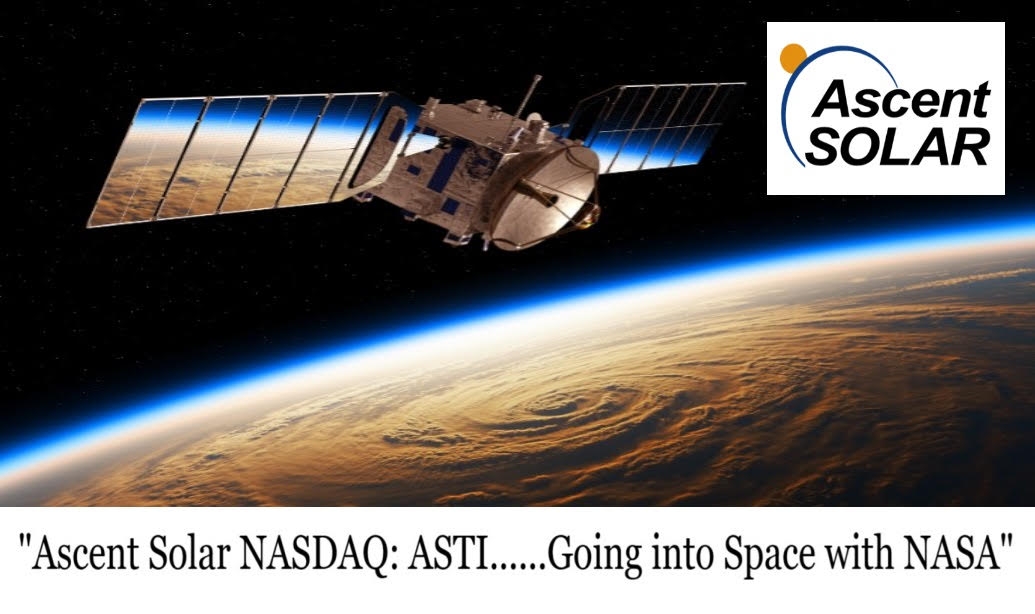

With NASA testing demonstrating potential radiation self-annealing in ASTI's CIGS technology, the Company is now expanding its validation program beyond Low Earth Orbit as demand grows for lightweight, resilient solar solutions for space-based power, orbital data centers, on-orbit servicing and other emerging markets
THORNTON, Colo. - Amzeal -- The race to build the next generation of space infrastructure is accelerating, and with it comes a fundamental requirement that is sometimes overlooked: reliable, lightweight power.
Satellites, orbital data centers, space-based solar power systems, on-orbit manufacturing platforms and servicing spacecraft all require photovoltaic technologies capable of operating in increasingly demanding environments.
That is precisely where Ascent Solar Technologies, Inc. (N A S D A Q: ASTI) $ASTI is attempting to establish a differentiated position.
Today's announcement may represent another important step in that strategy.
Ascent Solar announced that it is expanding its CIGS thin-film photovoltaic testing program beyond Low Earth Orbit (LEO) after receiving increased requests for solar solutions capable of supporting missions across multiple orbital environments. The company plans in-house characterization campaigns through the remainder of 2026 to evaluate survivability and performance in increasingly challenging conditions.
For investors, the significance is not simply that ASTI is conducting another test program. The bigger story is that the company is attempting to qualify its technology for a much broader portion of the emerging space economy.
Investor Highlights
Today's News: ASTI Sets Its Sights on More Demanding Orbits
The centerpiece of today's announcement is Ascent Solar's decision to broaden its space qualification program beyond LEO.
The company is preparing in-house testing designed to determine whether its CIGS thin-film photovoltaic technology can maintain performance in Medium Earth Orbit (MEO), Geostationary Orbit (GEO) and other high-energy orbital environments.
The campaigns are expected to progressively expose the technology to increasingly demanding radiation conditions, with the program expected to conclude during the fourth quarter of 2026.
Importantly, ASTI is not starting this effort from zero.
The company says previous NASA testing in LEO demonstrated the potential for its CIGS photovoltaic technology to recover from radiation exposure through self-annealing, a phenomenon described in scholarly literature as "Remarkable Recovery."
ASTI is now extending that research to determine whether similar recovery characteristics can be observed under the significantly harsher radiation environments encountered in higher orbits.
More on Amzeal News
If the results continue to be positive, the potential applications could extend well beyond conventional satellite systems.
Management specifically points toward emerging opportunities including on-orbit servicing and assembly, space-based solar power and orbital data centers.
Why Multi-Orbit Capability Could Matter
The space economy is becoming considerably more complex.
Instead of simply launching satellites into LEO, future infrastructure is expected to operate across multiple orbital regimes, each presenting different radiation, thermal and environmental challenges.
A solar technology capable of maintaining performance across those environments could potentially become increasingly valuable to spacecraft designers seeking to reduce mission risk while maximizing usable power.
That is the strategic opportunity ASTI is pursuing.
The company has approximately four decades of research and development experience and 15 years of manufacturing experience, supported by its research and development center and 5-MW nameplate production facility in Thornton, Colorado.
Recent Commercial Developments Add Another Layer
Today's announcement follows several important commercial developments during 2026.
Earlier this month, Ascent Solar highlighted accelerating demand from the unmanned systems market while reiterating that space remains its primary strategic focus.
The company said its thin-film solar technology has been integrated into Reditus Space's ENOS spacecraft, scheduled to launch this fall. ASTI also announced a new order for 100 photovoltaic modules supporting a satellite intended to manufacture components in space. Together, these opportunities could support approximately 10–25 kilowatts of recurring annual demand, according to management.
That is significant because it illustrates how ASTI's technology is moving from development and testing toward actual spacecraft applications.
Drones and HAPS Expand the Opportunity
ASTI's August 5 announcement also highlighted accelerating demand from the global drone market.
The company has received initial wing-integration orders from two Eastern European drone manufacturers, with potential recurring annual demand estimated at approximately 200–300 kilowatts as production scales.
ASTI is also pursuing additional opportunities with U.S. drone manufacturers and a European High-Altitude Platform Station (HAPS) program.
For investors, HAPS could be particularly interesting because these platforms operate at high altitude and can support communications, surveillance and other applications where lightweight and reliable power generation can be extremely valuable.
The same characteristics that make ASTI's technology attractive for spacecraft—low weight, flexibility, durability and power density—can translate into advantages for unmanned aircraft.
Unmanned Marine Systems Provide Another Growth Avenue
ASTI is also seeing demand from the autonomous marine sector.
The company has reported initial product orders from two unmanned marine vehicle companies, with potential recurring annual demand estimated at approximately 125–200 kilowatts.
This illustrates an important element of ASTI's strategy: the company can potentially leverage one core thin-film CIGS technology platform across multiple specialized markets rather than relying exclusively on one end market.
Still, management has been clear that space remains the primary focus.
June's Atomic Oxygen Results Remain a Major Technology Milestone
Today's announcement also builds upon ASTI's June 29 technology milestone involving Atomic Oxygen testing.
The company reported that its space-grade thin-film photovoltaic products experienced zero damage during a test campaign designed to represent approximately six months of exposure in Low Earth Orbit.
More on Amzeal News
Atomic Oxygen is one of the most challenging environmental hazards for spacecraft operating in LEO because it can erode polymers, coatings and other materials used to protect solar arrays.
The successful testing therefore provided another piece of evidence supporting ASTI's effort to develop solar products capable of surviving harsh space environments.
NASA Remains an Important Part of the Technology Story
ASTI's relationship with NASA is particularly relevant to today's announcement.
The company previously entered a collaborative agreement with NASA's Marshall Space Flight Center and Glenn Research Center to advance thin-film photovoltaic power-beaming capabilities. That work focused on developing CIGS photovoltaic modules capable of generating power from energy-dense light beams at intensities substantially above normal sunlight.
Today's multi-orbit testing program builds upon the broader body of NASA-related research and testing that ASTI believes can help validate the unique characteristics of its CIGS technology.
For investors, NASA involvement does not guarantee commercial success, but it does provide important technical context for why ASTI's technology is being investigated for demanding space applications.
H1 Progress and Q2 Financials Put the Opportunity in Perspective
In July, ASTI reported significant first-half progress, including completion of prepaid customer orders, Atomic Oxygen testing, continued development of space power-beaming capabilities, new European business leads and additional UAV, HAPS and marine opportunities.
The company's Q2 results subsequently showed revenue of approximately $95,000, more than four times the year-earlier figure, although the company remained unprofitable.
That financial reality is important for investors.
ASTI remains an emerging technology company, and its ability to convert testing, customer orders and strategic partnerships into meaningful recurring revenue will ultimately be one of the most important factors determining its long-term success.
Investment Perspective
Today's announcement gives investors another reason to pay attention to Ascent Solar Technologies.
The company is not simply attempting to sell another conventional solar panel. It is working to establish its lightweight CIGS technology as a power platform for increasingly demanding aerospace and space applications.
The progression during 2026 is notable:
LEO testing → Atomic Oxygen resilience → NASA radiation research → multi-orbit qualification → spacecraft deployments → satellite orders → space power-beaming development → drones → HAPS → autonomous marine systems.
The potential prize is substantial if ASTI can successfully translate this technology pipeline and growing customer interest into meaningful recurring revenue.
At the same time, investors should recognize that much of the opportunity remains developmental and that the company's financial performance remains an important risk factor.
Nevertheless, today's decision to expand testing into MEO, GEO and other high-energy orbital environments, building upon encouraging NASA-related results, represents a meaningful escalation of Ascent Solar's ambitions.
With demand growing for power systems capable of supporting the next generation of orbital infrastructure, ASTI's progress through the remainder of 2026 could be closely watched by investors seeking exposure to the intersection of NASA-supported space technology, advanced photovoltaics, defense, autonomous systems and the emerging orbital economy.
For more information on $ASTI visit: https://www.ascentsolar.com https://compasslivemedia.com/asti/
Media Contact
Company Name: Ascent Solar Technologies, Inc (N A S D A Q: ASTI)
Contact Person: Paul Warley, CEO
Email: sales@ascentsolar.com
Phone: (720) 872-5000
Country: United States
Website: https://www.ascentsolar.com
DISCLAIMER: https://corporateads.com/disclaimer/
Disclosure listed on the CorporateAds website
Satellites, orbital data centers, space-based solar power systems, on-orbit manufacturing platforms and servicing spacecraft all require photovoltaic technologies capable of operating in increasingly demanding environments.
That is precisely where Ascent Solar Technologies, Inc. (N A S D A Q: ASTI) $ASTI is attempting to establish a differentiated position.
Today's announcement may represent another important step in that strategy.
Ascent Solar announced that it is expanding its CIGS thin-film photovoltaic testing program beyond Low Earth Orbit (LEO) after receiving increased requests for solar solutions capable of supporting missions across multiple orbital environments. The company plans in-house characterization campaigns through the remainder of 2026 to evaluate survivability and performance in increasingly challenging conditions.
For investors, the significance is not simply that ASTI is conducting another test program. The bigger story is that the company is attempting to qualify its technology for a much broader portion of the emerging space economy.
Investor Highlights
- Today's announcement expands ASTI's testing beyond LEO into MEO, GEO and other high-energy orbits
- New testing builds upon prior NASA results showing potential radiation recovery through self-annealing
- The expanded testing program is expected to continue through Q4 2026
- Management says customer requests for multi-orbit solar solutions are increasing
- Space remains ASTI's primary strategic market
- ASTI's solar technology is integrated into Reditus Space's ENOS spacecraft
- A separate satellite customer has ordered 100 photovoltaic modules
- August developments include new drone and HAPS opportunities with potential recurring demand
- Unmanned marine systems are emerging as another commercial application
- June Atomic Oxygen testing demonstrated zero damage in the company's test campaign
- Q2 revenue increased significantly year over year, although the company remains unprofitable
Today's News: ASTI Sets Its Sights on More Demanding Orbits
The centerpiece of today's announcement is Ascent Solar's decision to broaden its space qualification program beyond LEO.
The company is preparing in-house testing designed to determine whether its CIGS thin-film photovoltaic technology can maintain performance in Medium Earth Orbit (MEO), Geostationary Orbit (GEO) and other high-energy orbital environments.
The campaigns are expected to progressively expose the technology to increasingly demanding radiation conditions, with the program expected to conclude during the fourth quarter of 2026.
Importantly, ASTI is not starting this effort from zero.
The company says previous NASA testing in LEO demonstrated the potential for its CIGS photovoltaic technology to recover from radiation exposure through self-annealing, a phenomenon described in scholarly literature as "Remarkable Recovery."
ASTI is now extending that research to determine whether similar recovery characteristics can be observed under the significantly harsher radiation environments encountered in higher orbits.
More on Amzeal News
- Summit Celebrates Fast 50 Honor
- Tap. Swipe. Pinch. Drag. Hold. Scroll. The Gesture Compliance Library Reads All Six
- Double Pinch. Wrist Turn. Palm Up. The New Glasses Speak Gesture Now
- NANNNA Shines in Stamford: The Men Who Came to Support Their Wives
- Aoolia Offers Free Virtual Try On Glasses for 1,500+ Frames Using Just a Phone Camera
If the results continue to be positive, the potential applications could extend well beyond conventional satellite systems.
Management specifically points toward emerging opportunities including on-orbit servicing and assembly, space-based solar power and orbital data centers.
Why Multi-Orbit Capability Could Matter
The space economy is becoming considerably more complex.
Instead of simply launching satellites into LEO, future infrastructure is expected to operate across multiple orbital regimes, each presenting different radiation, thermal and environmental challenges.
A solar technology capable of maintaining performance across those environments could potentially become increasingly valuable to spacecraft designers seeking to reduce mission risk while maximizing usable power.
That is the strategic opportunity ASTI is pursuing.
The company has approximately four decades of research and development experience and 15 years of manufacturing experience, supported by its research and development center and 5-MW nameplate production facility in Thornton, Colorado.
Recent Commercial Developments Add Another Layer
Today's announcement follows several important commercial developments during 2026.
Earlier this month, Ascent Solar highlighted accelerating demand from the unmanned systems market while reiterating that space remains its primary strategic focus.
The company said its thin-film solar technology has been integrated into Reditus Space's ENOS spacecraft, scheduled to launch this fall. ASTI also announced a new order for 100 photovoltaic modules supporting a satellite intended to manufacture components in space. Together, these opportunities could support approximately 10–25 kilowatts of recurring annual demand, according to management.
That is significant because it illustrates how ASTI's technology is moving from development and testing toward actual spacecraft applications.
Drones and HAPS Expand the Opportunity
ASTI's August 5 announcement also highlighted accelerating demand from the global drone market.
The company has received initial wing-integration orders from two Eastern European drone manufacturers, with potential recurring annual demand estimated at approximately 200–300 kilowatts as production scales.
ASTI is also pursuing additional opportunities with U.S. drone manufacturers and a European High-Altitude Platform Station (HAPS) program.
For investors, HAPS could be particularly interesting because these platforms operate at high altitude and can support communications, surveillance and other applications where lightweight and reliable power generation can be extremely valuable.
The same characteristics that make ASTI's technology attractive for spacecraft—low weight, flexibility, durability and power density—can translate into advantages for unmanned aircraft.
Unmanned Marine Systems Provide Another Growth Avenue
ASTI is also seeing demand from the autonomous marine sector.
The company has reported initial product orders from two unmanned marine vehicle companies, with potential recurring annual demand estimated at approximately 125–200 kilowatts.
This illustrates an important element of ASTI's strategy: the company can potentially leverage one core thin-film CIGS technology platform across multiple specialized markets rather than relying exclusively on one end market.
Still, management has been clear that space remains the primary focus.
June's Atomic Oxygen Results Remain a Major Technology Milestone
Today's announcement also builds upon ASTI's June 29 technology milestone involving Atomic Oxygen testing.
The company reported that its space-grade thin-film photovoltaic products experienced zero damage during a test campaign designed to represent approximately six months of exposure in Low Earth Orbit.
More on Amzeal News
- Transtek Supports Diabetes Management with Connected Blood Glucose Monitoring Solutions
- Transtek Highlights Connected RPM Solutions for Care Beyond Virtual Visits
- Education Through Music-LA Honors Grammy-Winning Pitch Perfect Music Supervisors Julianne Jordan & Julia Michels, Educator Anthony "Tony" White
- EliteGen Research Opens Its Doors to the Peptide Research Community
- TOKSTAR Welcomes NBA 2K Star Young Wayne
Atomic Oxygen is one of the most challenging environmental hazards for spacecraft operating in LEO because it can erode polymers, coatings and other materials used to protect solar arrays.
The successful testing therefore provided another piece of evidence supporting ASTI's effort to develop solar products capable of surviving harsh space environments.
NASA Remains an Important Part of the Technology Story
ASTI's relationship with NASA is particularly relevant to today's announcement.
The company previously entered a collaborative agreement with NASA's Marshall Space Flight Center and Glenn Research Center to advance thin-film photovoltaic power-beaming capabilities. That work focused on developing CIGS photovoltaic modules capable of generating power from energy-dense light beams at intensities substantially above normal sunlight.
Today's multi-orbit testing program builds upon the broader body of NASA-related research and testing that ASTI believes can help validate the unique characteristics of its CIGS technology.
For investors, NASA involvement does not guarantee commercial success, but it does provide important technical context for why ASTI's technology is being investigated for demanding space applications.
H1 Progress and Q2 Financials Put the Opportunity in Perspective
In July, ASTI reported significant first-half progress, including completion of prepaid customer orders, Atomic Oxygen testing, continued development of space power-beaming capabilities, new European business leads and additional UAV, HAPS and marine opportunities.
The company's Q2 results subsequently showed revenue of approximately $95,000, more than four times the year-earlier figure, although the company remained unprofitable.
That financial reality is important for investors.
ASTI remains an emerging technology company, and its ability to convert testing, customer orders and strategic partnerships into meaningful recurring revenue will ultimately be one of the most important factors determining its long-term success.
Investment Perspective
Today's announcement gives investors another reason to pay attention to Ascent Solar Technologies.
The company is not simply attempting to sell another conventional solar panel. It is working to establish its lightweight CIGS technology as a power platform for increasingly demanding aerospace and space applications.
The progression during 2026 is notable:
LEO testing → Atomic Oxygen resilience → NASA radiation research → multi-orbit qualification → spacecraft deployments → satellite orders → space power-beaming development → drones → HAPS → autonomous marine systems.
The potential prize is substantial if ASTI can successfully translate this technology pipeline and growing customer interest into meaningful recurring revenue.
At the same time, investors should recognize that much of the opportunity remains developmental and that the company's financial performance remains an important risk factor.
Nevertheless, today's decision to expand testing into MEO, GEO and other high-energy orbital environments, building upon encouraging NASA-related results, represents a meaningful escalation of Ascent Solar's ambitions.
With demand growing for power systems capable of supporting the next generation of orbital infrastructure, ASTI's progress through the remainder of 2026 could be closely watched by investors seeking exposure to the intersection of NASA-supported space technology, advanced photovoltaics, defense, autonomous systems and the emerging orbital economy.
For more information on $ASTI visit: https://www.ascentsolar.com https://compasslivemedia.com/asti/
Media Contact
Company Name: Ascent Solar Technologies, Inc (N A S D A Q: ASTI)
Contact Person: Paul Warley, CEO
Email: sales@ascentsolar.com
Phone: (720) 872-5000
Country: United States
Website: https://www.ascentsolar.com
DISCLAIMER: https://corporateads.com/disclaimer/
Disclosure listed on the CorporateAds website
Source: CorporateAds
0 Comments
Latest on Amzeal News
- Victoria's Midday Power Saver Explains How Households Can Manage Electricity Costs in 2026
- Boston Industrial Solutions Introduces the New Volta® M100 Pad Printing Machine
- Not a Black Box Launches TalentOS, the First Talent Harness Operating System
- E D Landry Holdings Enters Health Tech With Nervy Eating, an Apple Watch App for Emotional Eating
- Proper Launches ProperMDM, Completing Its End-to-End Android Solution
- A Diwali Celebration with Heritage at South Brunswick Residents & American Properties
- Law Offices of Larry E. Bray, P.A. Wins Fourth District Appeal Clarifying Limits of Florida's Offer of Judgment Statute
- L-Tron's Mobile Driver's License Reader (mDLR-1) Featured in WHEC/News10NBC Story
- Parental control app for iPhone SimpleSentinel launches on Product Hunt: limits a child can't undo
- Holiday Magic Returns to Downtown Downers Grove November 27-29
- What If the Greatest Gift This Holiday Season Came in a Dream of Your Loved One in Spirit?
- Scoop Social Co. Brings Its Signature Mobile Dessert Experience to Minneapolis
- Techsmarter's Turnaround Gains Momentum as Company Shifts Toward Outdoor Technology
- LGF Lab Gas Flow Launches Fully Automatic Laboratory Gas Changeover Manifold System with Ultra High Purity Gas Regulator Valve
- You Touched Your Phone 2,600 Times Today. Somebody Counted
- Record Q3 Revenue and Gross Profit Delivered: Revenue Surges 40%, Gross Margin Soars to 36% & Adjusted EBITDA Loss Narrows 64% for Cycurion, Inc $CYCU
- Inaugural 12 Trees of Christmas gala raises $525,000 for DMG research and family support
- BitTitan Expands MigrationWiz with SharePoint Sites Migration and Simplified Collaboration Licensing
- ASI Honors 11 Clients with 2026 Great Things Awards for Measurable Impact Across Membership, Education, and Engagement
- A Skill Store Built for Bots First: The Log File Opens Its Agentic Skill Store